Massachusetts Camper or Trailer Plates?

Massachusetts Camper or Trailer Plates?

It’s a question almost as old as some of the Registry workers themselves: In Massachusetts can I put Camper or trailer plates on my camper trailer?

Camper plates must have permanent living facilities (sink and toilet).

Camper plates may also be issued to vehicles which meet the definition of House Trailer (a house trailer that has no motor power and is equipped for human habitation – includes bathroom and sink facilities). These vehicles are not to be used to transport property other than that property used for human habitation or camping purposes. A four wheel tow dolly, when used in conjunction with a tractor/trailer combination, must be registered as a semi-trailer. Trailer weight is always rounded up to the nearest thousand pounds.

Auto Home (CAMPER):

A. Definition: Auto home, any motor vehicle originally designed or permanently altered and equipped for human habitation which is not used to transport property other than that property used for human habitation or camping purposes. A motor vehicle designed primarily to transport property which has been temporarily altered or equipped for human habitation shall not be deemed to be an auto home. (MGL ch. 90 s. 1)

B. Plate Types: There are three types of auto home plates:

Auto Home Normal (Plate Type: AHN) – Auto Home Normal plates consist of three to five numbers

Auto Home Reserved (Plate Type: AHR) – Auto Home Reserved plates consist of one or two numbers.

Auto Home Vanity (Plate Type: AHV) – ALAR maintains the plate number preceded by the code “CA.”

C. Plates Issued: Auto Home Normal, Reserved and Vanity – Two plates are issued. For Trailers, the Clerk will discard the second plate.

D. Plate Fees: An Auto Home Normal (AHN) plate is charged a $50 yearly fee. An Auto Home Reserved (AHR) plate is charged $70 ($50 annual fee plus a $20 special plate fee). An Auto Home Vanity (AHV) plate is charged $100 ($50 annual fee plus a $50 special plate fee).

If the customer registers the vehicle after October 1, the registration fee will be half the initial registration fee. The special plate fee will remain the same.

E. Expiration Date: Auto Home plates expire annually on November 30.

Trailer:

A. Definition:  Trailer plates are issued to any vehicle or object on wheels and having no motive power of its own, but which is drawn by or used in combination with, a motor vehicle. It shall not include a pole dolly or pole dickey, so called, nor a pair of wheel commonly used as an implement for other purposes than transportation, or a portable, collapsible or separate two wheel tow dolly limited only to the purpose of transporting or towing a registered vehicle, nor farm machinery or implements when used in connection with the operation of a farm or estate, nor any vehicle when towed behind a farm tractor and used in connection with the operation of a farm or estate.

Camper plates may also be issued to vehicle which meet the definition of House Trailer (a house trailer has no motor power and is equipped for human habitation — includes bathroom and sink facilities.) These vehicles are not to be used to transport property other than that property used for human habitation or camping purposes. A four wheel tow dolly, when used in conjunction with a tractor/trailer combination, must be registered as a semi-trailer. Trailer weight is always rounded up to the nearest thousand pounds.

B. Plate Types: There are two types of trailer plates.

Trailer Normal (Plate Type: TRN) – Trailer Normal plates consist of four to six numbers.

Trailer Reserved (Plate Type: TRR) – Trailer Reserved plates consist of three number or less or a combination of letter and numbers (first two digits may be letters TL, TT, TR).

C. Plates Issued: Trailer Normal and Reserved – One plate is issued.

D. Plate Fees: A Trailer Normal plate fee is based on the weight of the trailer at the rate of $20 per 1,000 pounds. A Trailer Reserved plate is charged the same registration fee as the Trailer Normal plus a $20 special plate fee.

E. Expiration Date: Trailer plates expire annually on November 30. All trailer registration fees are reduced by 1/2 on or after September 1. NOTE: if the total gross weight of a trailer, which is the combined weight of the trailer and its cargo, is 3,000 lbs or less, a MA title is not required.

Homemade Trailers

Builders of homemade trailers with a gross weight of more than 3,000 lbs. must apply for a MA Assigned Vehicle Identification Number.

The gross weight of a new or used trailer is determined by the manufacturer and will be listed on the trailer’s certificate of Origin and on the trailer itself. The gross weight of a homemade trailer is determined by the builder of the trailer.

NOTE: Log Splitter of Wood chipper

A trailer registration plate may be issued fi the log splitter of wood chipper and trailer are permanent components of one another (ie- non-detachable). However, a trailer registration may not be issued to a log splitter or wood chipper by itself (ie- the unit is not permanently attached to a trailer). If the log splitter or wood chipper is detachable, the trailer carrying the log splitter must be insured and registered.
Blizzard 2022 Driving Tips

Blizzard 2022 Driving Tips

Blizzard 2022 Driving Tips. The National Weather Service has officially placed eastern Massachusetts and all of Rhode Island in a Blizzard Warning until early Sunday morning. Blizzard conditions are due to wind and visibility. Forecasters are predicting up to 3 feet of snow and “white out” scenarios with gusts reaching 60 miles per hours.

Blizzard 2022 Driving Tips:

Don’t ever drive during a blizzard. Leave the driving to the plows and rescue vehicles. Instead, hunker down, do a puzzle, enjoy your family, stay warm and stay inside.

Beware of snow banks! Go slow when pulling in and out of parking lots or side streets. Drive slow, in general, because you can’t see vehicles driving in and out of parking lots and side streets. Road are narrower and driving more harrowing. Be careful.

Be prepared.  Have your mechanic check your car’s battery, brakes, fluid levels and tire wear.  Keep your gas tank more than half full- it lowers the chance of freezing and you’ll also avoid running out of gas if your stuck in a traffic jam on 128.

Take care in pulling out.  Your car reacts differently to accelerating on snow, make sure there is plenty of time/space to get your car up to speed.  Remember other vehicles may have trouble braking because of the conditions.

Back your car into the driveway when possible.  You’ll have better vision when pulling out.

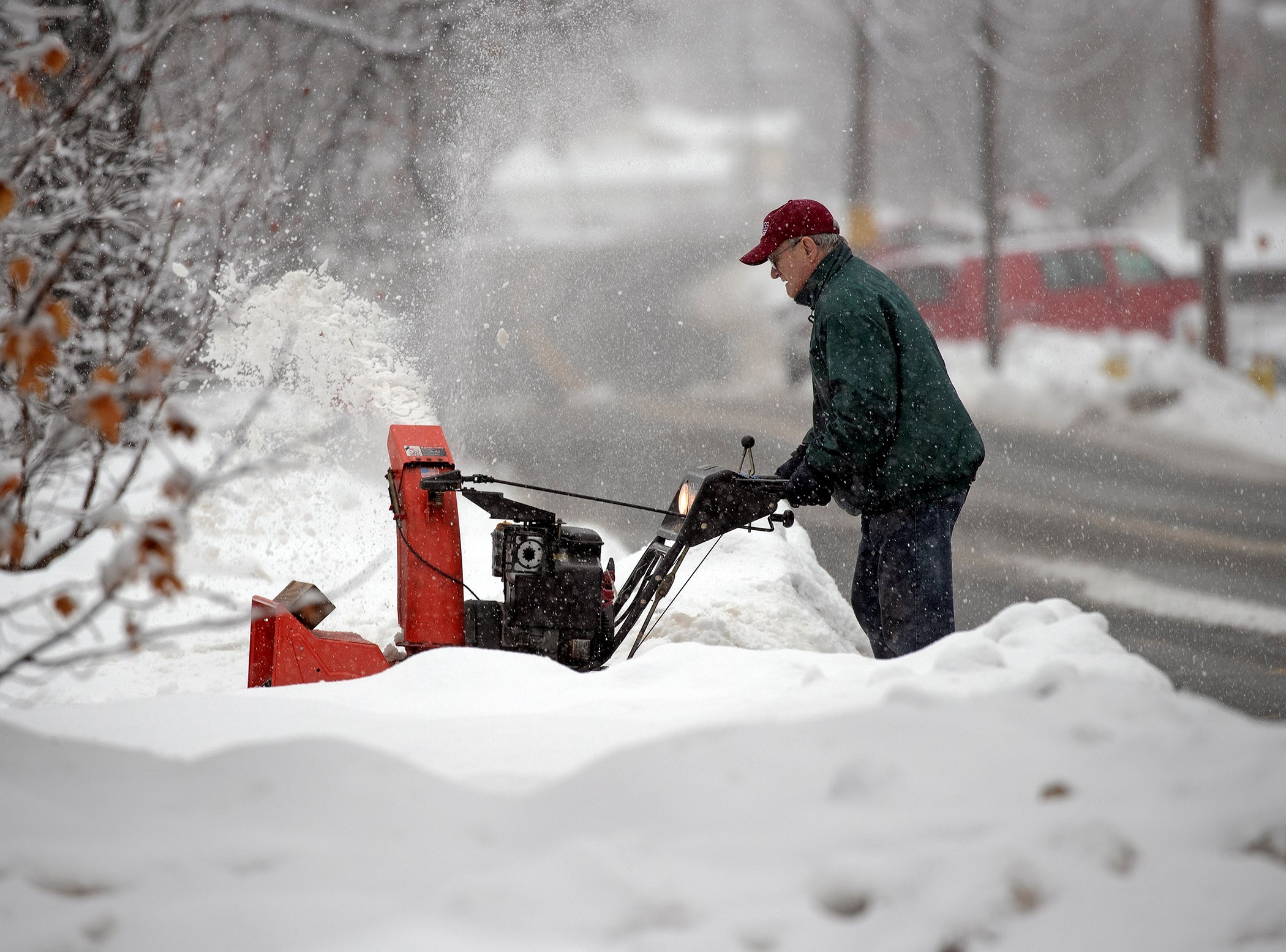
Be aware of walkers or joggers on the street and people removing snow with snowblowers and shovels. When sidewalks are impassable, die hard joggers and dog walkers are forced to venture onto the street for a clearer path.   Keep an eye out for them!

When waiting to make a left hand turn, keep the wheels of your car pointed forward.  If your wheels are turned to the left and you are rear-ended, your car will be pushed into the path of on-coming traffic.

Braking.  If your car does not have anti-lock brakes and you start to skid, pump the brakes to gain control of the skidding.  If your car has anti-lock brakes, slam and hold down the brakes to allow the anti-lock system to take over.

When you must travel during a storm, notify others of your estimated time of arrival and your intended route.

If stuck, stay in the car and wait for help.  Run the engine and heater sparingly.  Also make your exhaust pipe is clear from snow and ventilate your car to prevent carbon monoxide build up.

If stuck in a storm, preserve your energy.  Have food (energy bars, trail mix, beef jerky) in your car.   They will provide your body with energy to produce its own heat.  Have water available to prevent dehydration.  Don’t eat snow, it lowers your body temperature- if necessary, melt it first.

Prepare a Winter Driving Kit and leave it in your trunk.  Your kit should include an extra pair of gloves, blankets, an ice scraper, food basics (energy bars, trail mix or beef jerky work well), water or energy drink.  An affordable car battery- air compressor can provide a battery charge or refill a flat tire.


Off Hour Claims Reporting


If after hours, following please find some of our companies’ off-hours claim reporting telephone numbers:

Travelers/ Premier:  1-877-425-2466

Vermont Mutual: 1-800-435-0397

Safety Insurance:  1-866-906-5016

MPIUA:  1-800-392-6108

Progressive: 1-800-776-4737

Commerce/MAPFRE: 1-800-922-8276

Amica: 1-800-242-6422

Plymouth Rock/Pilgrim Insurance: 617-951-1620

Hagerty Insurance: 1-800385-0274

Swyfft Insurance:  1-855-479-9338

Auto Repairs, Insurance Companies and Betterment

Betterment


Auto Repairs, Insurance Companies and Betterment …

Over the years we’ve seen claim situations where the claims department depreciates what they’ll pay for parts. This typically occurs with older vehicles and can leave the consumer holding the repair bag.

This is part of the insurance contract that does not allow “betterment.”

As explained by one claims department:

Betterment applies on items that have a finite life span, or to areas of a vehicle that have prior damage that overlaps new damage.

In this case, the policyholder has a 15 year old vehicle that needs new mechanical parts.  These parts wear over time and are not expected to last the lifetime of the vehicle.

The policy owes for the actual cash value of the parts lost or damaged. The betterment accounts for the difference in value as the vehicle is getting new parts.

In effect, it is depreciation. The policy cannot leave the  policyholder in a better position after the loss than he was in before the loss. The betterment makes the depreciation adjustment so that the claim keeps him on equal footing and allows for the actual cash value of the parts being replaced.

In a few extreme cases, when depreciation has seemed excessively penal, our Agency has been able to talk to the claims handler and negotiate a more reasonable settlement.


Umbrella Coverage


Personal Liability Umbrella Coverage protects you from lawsuits. Coverage “sits-over” your home and auto liability limits with available limits from $1,000,000- $5,000,000.

Coverage is relatively inexpensive to purchase.

Umbrella Policies require underlying motor vehicle liability limits of $250,000 per person/$500,000 per accident.

In addition to coverage limits, the insurance company provides legal defense.

Give us a call to discuss Umbrella Coverage.


Happy New Year!

Happy New Year from your friends at Johnson & Rohan Insurance

Our office will be closed on Friday, New Year’s Eve., December 31st re-opening on Monday, January 3, 2022.

Johnson & Rohan Insurance wishes you the happiest of New Years!

Thank you for your business.

In spite of this awful pandemic, our Agency had a successful 2021. We grew in size and acquired additional markets, including: Cowbell Cyber for business cyber coverage, Bristol West Insurance and Embark-General for MA auto insurance.

As always, we welcome the opportunity to help you with any insurance issues you have including: business, home, autos, recreational vehicles, or life insurance.

-Happy New Year from The Johnson Family.

Off Hour Claim Reporting

Happy Holidays from Johnson & Rohan Insurance
Happy Holidays from our family to your family.

If after hours, following please find some of our companies’ off-hours claim reporting telephone numbers:

Travelers/ Premier:  1-877-425-2466

Vermont Mutual: 1-800-435-0397

Safety Insurance:  1-866-906-5016

MPIUA:  1-800-392-6108

Progressive: 1-800-776-4737

Commerce/MAPFRE: 1-800-922-8276

Amica: 1-800-242-6422

Plymouth Rock/Pilgrim Insurance: 617-951-1620

Hagerty Insurance: 1-800385-0274

Swyfft Insurance:  1-855-479-9338

Cyber Liability Coverage


Cyber Liability Coverage: with an estimated cyber-attack occurring every 19 seconds, your business requires a robust cyber insurance policy to keep you safe and able to recover from cyber incidents.

Cyber Liability Coverage

  • Security Breach Expense
  • Security Breach Liability
  • Restoration of Electronic Data
  • Extortion Threats
  • Public Relations Expense
  • Computer and Funds Transfer
  • Business Income & Extra Expense
  • Social Engineering
  • Ransom Payments
  • Hardware Replacement Costs
  • Telecommunications Fraud
  • Post Brach Remediation Coverage

Standalone cyber insurance coverage is not as expensive as you may think. Give us a call to talk about what we can offer to help protect your business from cyber threats.

Life Insurance and Covid-19

Life Insurance and Covid-19


There’s no doubt that the coronavirus pandemic has taught us a number of valuable lessons, one of which is how financially vulnerable we are.

Many have witnessed first-hand how quickly life can change and perhaps been reminded of the importance of having financial protection in place.

If you’ve been motivated to take out life insurance since COVID-19, here’s what you need to know.

What is life insurance?

Life insurance pays out a lump sum to your family or other dependants if you pass away during the term (length) of the policy. It offers peace of mind that your loved ones would be financially protected if you were no longer around to provide for them.

Effect of COVID-19 on life insurance

While coronavirus has had a huge impact on the insurance industry as a whole, the life insurance sector has been left relatively unscathed. There has been no evidence of life insurers pulling out of the market, premiums have remained steady and COVID-related claims are being paid.

Life insurance is still readily available to buy and – whether new or existing – policies will cover coronavirus.

And, while the process of applying for life insurance is taking longer as insurers have been updating their underwriting processes, these issues have been largely resolved and application times have improved.

One undeniable change however, is the introduction of COVID-19-specific questions on life insurance application forms.  Insurers are asking a few more questions and underwriting has tightened in some areas, especially for those with diabetes, asthma or who might be overweight.

This means that when you run a life insurance quote, you’ll need to answer questions such as:

Within the last 30 days have you:

  • tested positive for coronavirus?
  • been advised to self-isolate?
  • had any symptoms of coronavirus?
  • been in direct contact with anyone who has been diagnosed with or who is suspected of having coronavirus?’

If you answer yes one or more of these questions, your life insurance application is likely to be postponed – how long for will depend on the insurer but it’s often around a month (after the point of recovery if you actually contracted the virus).

And if you have suffered particularly serious symptoms, for example if you were hospitalised, your application could be postponed for longer.

It’s crucial you answer these and all other questions honestly however, and don’t fail to disclose pre-existing conditions. If you ever make a claim and your insurer discovers you were dishonest, it may well be rejected.

Can I still get cover with a pre-existing condition?

The short answer is yes, but it will depend on the type and severity of the condition, and many insurers have become more selective about who they accept.

If your condition puts you at greater risk from COVID-19, such as asthma and diabetes, or you’re over 50 years of age, you may find it harder to get life insurance coverage, while those insurers that do offer cover are likely to charge higher premiums.

It is typical for the insurer to review your medical records from your General Practitioner before making an offer. You will also likely need to have a medical examination, called a paramedical exam. These usually only last around 20 to 30 minutes and involve answering some questions about your health and lifestyle, as well as having your height, weight and blood pressure checked, and having a blood or urine sample taken.

If you’re concerned you won’t be able to find coverage, it’s worth speaking to an independent agent, like Johnson & Rohan, whose experts will discuss your options and help find you the most appropriate coverage.  Our agency works with over 70 life carriers- we’ll find you the best available coverage and premium.


Ordinance or Law Coverage

Ordinance or Law Coverage

Ordinance or Law Coverage was recently in the news and, as a result, our Agency received a flurry of phone calls. After completing dozens of reviews of coverage, let’s talk about:

Ordinance or Law Coverage — coverage for loss caused by enforcement of ordinances or laws regulating construction and repair of damaged buildings. Older structures that are damaged may need upgraded electrical; heating, ventilating, and air-conditioning (HVAC); and plumbing units based on city codes.

Ordinance or Law insurance coverage provides limited protection for costs associated with repairing, rebuilding, or constructing a structure when physical damage to the structure by a covered cause of loss triggers an ordinance or law.

According to Adjuster’s International Disaster Recovery Consulting, compliance with ordinances and
laws after a loss can add 50% or more to the cost of the claim. (Paul O. Dudey CPCU and Donald S. Malecki, Adjusting Today Issue #3009, “Ordinance or Law Coverage – Code for Recovery!”).
Insureds should take a proactive approach to their insurance program and the coverage provided by the
program. Learning about important exclusions and limitations after a catastrophe strikes will cause the Insured to experience frustration and anxiety. Insureds should always read their policies, and in some states, may be required by law to do so.


ORDINANCE OR LAW EXCLUSION

Most property insurance policies will have an Ordinance or Law exclusion. The exclusion applies to both physical damage and time element coverage. Ordinance or Law coverage is readily available in the market, typically by end

Give us a call to review your coverage.

Johnson & Rohan