Only You Can Prevent Dryer Fires

Prevent Dryer Fires

How can we prevent dryer fires? According to Consumer Reports: “Dryer fires are responsible for seven deaths, 344 civilian injuries, and $233 million in property damage annually.” They offer the following prevention ideas:

1. Clean the Lint Filter

Not once a month, or even once a week: “Clean the lint from the dryer’s lint screen after every load,” says Richard Handel, the test engineer who oversees CR’s laundry appliance lab. “This helps prevent a fire, and it also helps your laundry dry faster.”

2. Replace Accordion-Style Ducts

Generally, dryers are equipped with a 4-inch vent in the back, which homeowners or installers connect to the exterior vent with a duct. But not all ducts will do.

If you see a plastic or foil accordion-style duct connecting your appliance to the vent, it’s a good idea to replace it. These are risky because they can sag, allowing lint to build up at low points and trapping lint in their ridges.

Handel recommends a rigid metal duct. “The smooth walls allow the air to flow, and also reduce the buildup of lint,” he says. “A flexible metal duct should be your second choice.”

One other tip: Use duct connectors and metal clamps or foil tape to join sections of duct rather than sheet-metal screws, which can catch lint and cause buildup inside the duct.

3. Clean the Dryer Duct Annually (at Least)

If you notice that your dryer takes longer to dry laundry than it used to, that’s a clue that there may be a blockage in the dryer vent system. When you’re drying a load, go outside and look at the vent. Do you see or feel exhaust air? If not, the vent or exhaust duct may be blocked with lint.

Start by disconnecting your dryer from the power source. And if you have a gas dryer, also turn off the gas valve near the dryer.

“Carefully slide the dryer away from the wall so that you can access the vent that’s typically in the back of the dryer,” Handel says. “If you have a gas dryer, take care not to overstretch or damage the gas line.”

Disconnect the duct from the dryer, and vacuum both the dryer and the duct—as much as you can access. Where possible, separate the duct into shorter sections for better access, then reassemble and attach the duct to the dryer. Be sure all joints in the duct are properly connected and held together with clamps or foil tape. Then return the dryer to its original spot and reconnect the power.

While you’re at it, clean behind the dryer and underneath it—lint builds up there, too. In winter, check after windy weather or snowstorms to be sure that snow isn’t blocking the outdoor vent.

4. Handle Chemical Stains With Care

Clothes stained with gas, cooking oil, cleaning agents, or other flammable chemicals or substances need special care. The Consumer Product Safety Commission recommends washing such stained clothing more than once to minimize volatile chemicals, then hanging to dry.

If you must use a dryer, use the lowest heat setting and a drying cycle that concludes with a cool-down period.

In the event that a fire does start, keep the dryer door closed to limit its oxygen supply—a fire needs oxygen to keep it going.

Homeowner Insurance and Inflation, Spring 2022

Whether you are checking out the news, managing your own business, paying at the pump or just wrapping up a trip to the grocery store, it’s obvious that inflation has risen to a level we haven’t seen in years.  The insurance industry and Homeowner insurance in particular are also impacted.

Your Homeowner policy tries to increase the Dwelling value of your home to keep pace with inflation.  As your agent we strive to to insure properties at 100% of their replacement costs.  In times of steep inflation this can be a challenge.  Some carriers are now increasing their keep-pace-with-inflation increases from 3% or 4%,  up to 8%.   We see cases where even this is not enough.  With a direct correlation between Dwelling value and annual premium- premiums are going up.

Please give us a call so that we can help with your next Homeowner renewal.  We can review your replacement cost and any updates to your home and help to maximize discounts for fire and burglar alarms or loss free discounts.  How would a higher deductible affect the annual premium?  We can let you know.  We’re all in this for the long haul, so please let us put our expertise to work for you and your family today.

Leaky Oil Tank Coverage

Leaky Oil Tank Coverage


Leaky Oil Tank Coverage. It’s been in the paper (Boston Globe) and on television (WCVB-5):

A leaky oil tank could cost a young couple their dream home.

The home insurance policy excludes oil spill coverage but limited coverage is available by endorsement.

Insurance companies require proof of safety equipment designed to prevent or limit oil spills.

Proof should be in the form of oil burner permit or Certificate of Compliance.

Cost and coverage varies between companies, one company (Safety Insurance) offers $50,000 of personal property coverage and $100,000 personal liability for $139.00 annually.

Please call us with any questions or to discuss.


Massachusetts Camper or Trailer Plates?

Massachusetts Camper or Trailer Plates?

It’s a question almost as old as some of the Registry workers themselves: In Massachusetts can I put Camper or trailer plates on my camper trailer?

Camper plates must have permanent living facilities (sink and toilet).

Camper plates may also be issued to vehicles which meet the definition of House Trailer (a house trailer that has no motor power and is equipped for human habitation – includes bathroom and sink facilities). These vehicles are not to be used to transport property other than that property used for human habitation or camping purposes. A four wheel tow dolly, when used in conjunction with a tractor/trailer combination, must be registered as a semi-trailer. Trailer weight is always rounded up to the nearest thousand pounds.

Auto Home (CAMPER):

A. Definition: Auto home, any motor vehicle originally designed or permanently altered and equipped for human habitation which is not used to transport property other than that property used for human habitation or camping purposes. A motor vehicle designed primarily to transport property which has been temporarily altered or equipped for human habitation shall not be deemed to be an auto home. (MGL ch. 90 s. 1)

B. Plate Types: There are three types of auto home plates:

Auto Home Normal (Plate Type: AHN) – Auto Home Normal plates consist of three to five numbers

Auto Home Reserved (Plate Type: AHR) – Auto Home Reserved plates consist of one or two numbers.

Auto Home Vanity (Plate Type: AHV) – ALAR maintains the plate number preceded by the code “CA.”

C. Plates Issued: Auto Home Normal, Reserved and Vanity – Two plates are issued. For Trailers, the Clerk will discard the second plate.

D. Plate Fees: An Auto Home Normal (AHN) plate is charged a $50 yearly fee. An Auto Home Reserved (AHR) plate is charged $70 ($50 annual fee plus a $20 special plate fee). An Auto Home Vanity (AHV) plate is charged $100 ($50 annual fee plus a $50 special plate fee).

If the customer registers the vehicle after October 1, the registration fee will be half the initial registration fee. The special plate fee will remain the same.

E. Expiration Date: Auto Home plates expire annually on November 30.

Trailer:

A. Definition:  Trailer plates are issued to any vehicle or object on wheels and having no motive power of its own, but which is drawn by or used in combination with, a motor vehicle. It shall not include a pole dolly or pole dickey, so called, nor a pair of wheel commonly used as an implement for other purposes than transportation, or a portable, collapsible or separate two wheel tow dolly limited only to the purpose of transporting or towing a registered vehicle, nor farm machinery or implements when used in connection with the operation of a farm or estate, nor any vehicle when towed behind a farm tractor and used in connection with the operation of a farm or estate.

Camper plates may also be issued to vehicle which meet the definition of House Trailer (a house trailer has no motor power and is equipped for human habitation — includes bathroom and sink facilities.) These vehicles are not to be used to transport property other than that property used for human habitation or camping purposes. A four wheel tow dolly, when used in conjunction with a tractor/trailer combination, must be registered as a semi-trailer. Trailer weight is always rounded up to the nearest thousand pounds.

B. Plate Types: There are two types of trailer plates.

Trailer Normal (Plate Type: TRN) – Trailer Normal plates consist of four to six numbers.

Trailer Reserved (Plate Type: TRR) – Trailer Reserved plates consist of three number or less or a combination of letter and numbers (first two digits may be letters TL, TT, TR).

C. Plates Issued: Trailer Normal and Reserved – One plate is issued.

D. Plate Fees: A Trailer Normal plate fee is based on the weight of the trailer at the rate of $20 per 1,000 pounds. A Trailer Reserved plate is charged the same registration fee as the Trailer Normal plus a $20 special plate fee.

E. Expiration Date: Trailer plates expire annually on November 30. All trailer registration fees are reduced by 1/2 on or after September 1. NOTE: if the total gross weight of a trailer, which is the combined weight of the trailer and its cargo, is 3,000 lbs or less, a MA title is not required.

Homemade Trailers

Builders of homemade trailers with a gross weight of more than 3,000 lbs. must apply for a MA Assigned Vehicle Identification Number.

The gross weight of a new or used trailer is determined by the manufacturer and will be listed on the trailer’s certificate of Origin and on the trailer itself. The gross weight of a homemade trailer is determined by the builder of the trailer.

NOTE: Log Splitter of Wood chipper

A trailer registration plate may be issued fi the log splitter of wood chipper and trailer are permanent components of one another (ie- non-detachable). However, a trailer registration may not be issued to a log splitter or wood chipper by itself (ie- the unit is not permanently attached to a trailer). If the log splitter or wood chipper is detachable, the trailer carrying the log splitter must be insured and registered.

Blizzard 2022 Driving Tips

Blizzard 2022 Driving Tips

Blizzard 2022 Driving Tips. The National Weather Service has officially placed eastern Massachusetts and all of Rhode Island in a Blizzard Warning until early Sunday morning. Blizzard conditions are due to wind and visibility. Forecasters are predicting up to 3 feet of snow and “white out” scenarios with gusts reaching 60 miles per hours.

Blizzard 2022 Driving Tips:

Don’t ever drive during a blizzard. Leave the driving to the plows and rescue vehicles. Instead, hunker down, do a puzzle, enjoy your family, stay warm and stay inside.

Beware of snow banks! Go slow when pulling in and out of parking lots or side streets. Drive slow, in general, because you can’t see vehicles driving in and out of parking lots and side streets. Road are narrower and driving more harrowing. Be careful.

Be prepared.  Have your mechanic check your car’s battery, brakes, fluid levels and tire wear.  Keep your gas tank more than half full- it lowers the chance of freezing and you’ll also avoid running out of gas if your stuck in a traffic jam on 128.

Take care in pulling out.  Your car reacts differently to accelerating on snow, make sure there is plenty of time/space to get your car up to speed.  Remember other vehicles may have trouble braking because of the conditions.

Back your car into the driveway when possible.  You’ll have better vision when pulling out.

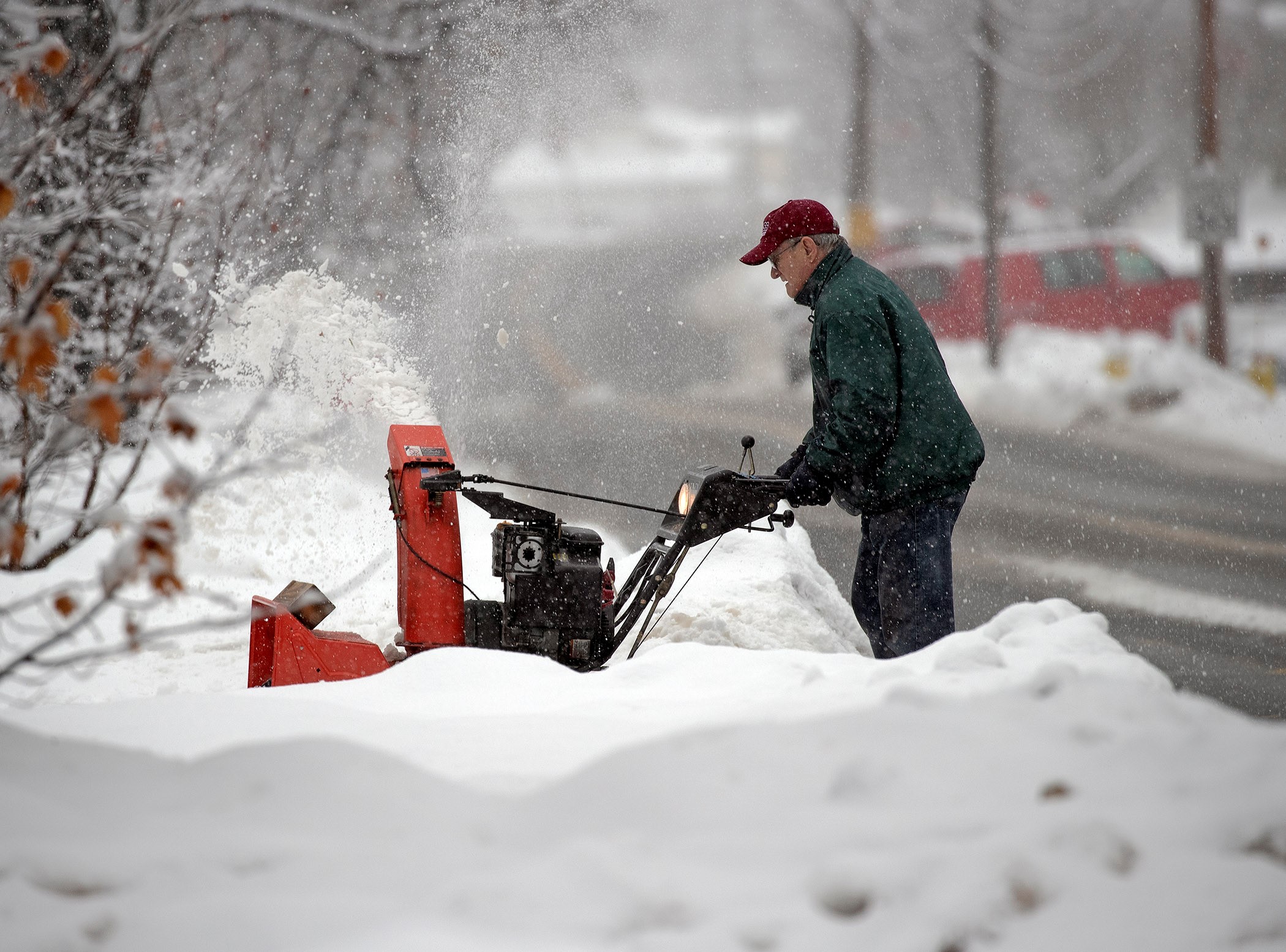
Be aware of walkers or joggers on the street and people removing snow with snowblowers and shovels. When sidewalks are impassable, die hard joggers and dog walkers are forced to venture onto the street for a clearer path.   Keep an eye out for them!

When waiting to make a left hand turn, keep the wheels of your car pointed forward.  If your wheels are turned to the left and you are rear-ended, your car will be pushed into the path of on-coming traffic.

Braking.  If your car does not have anti-lock brakes and you start to skid, pump the brakes to gain control of the skidding.  If your car has anti-lock brakes, slam and hold down the brakes to allow the anti-lock system to take over.

When you must travel during a storm, notify others of your estimated time of arrival and your intended route.

If stuck, stay in the car and wait for help.  Run the engine and heater sparingly.  Also make your exhaust pipe is clear from snow and ventilate your car to prevent carbon monoxide build up.

If stuck in a storm, preserve your energy.  Have food (energy bars, trail mix, beef jerky) in your car.   They will provide your body with energy to produce its own heat.  Have water available to prevent dehydration.  Don’t eat snow, it lowers your body temperature- if necessary, melt it first.

Prepare a Winter Driving Kit and leave it in your trunk.  Your kit should include an extra pair of gloves, blankets, an ice scraper, food basics (energy bars, trail mix or beef jerky work well), water or energy drink.  An affordable car battery- air compressor can provide a battery charge or refill a flat tire.


Off Hour Claims Reporting


If after hours, following please find some of our companies’ off-hours claim reporting telephone numbers:

Travelers/ Premier:  1-877-425-2466

Vermont Mutual: 1-800-435-0397

Safety Insurance:  1-866-906-5016

MPIUA:  1-800-392-6108

Progressive: 1-800-776-4737

Commerce/MAPFRE: 1-800-922-8276

Amica: 1-800-242-6422

Plymouth Rock/Pilgrim Insurance: 617-951-1620

Hagerty Insurance: 1-800385-0274

Swyfft Insurance:  1-855-479-9338

Auto Repairs, Insurance Companies and Betterment

Betterment


Auto Repairs, Insurance Companies and Betterment …

Over the years we’ve seen claim situations where the claims department depreciates what they’ll pay for parts. This typically occurs with older vehicles and can leave the consumer holding the repair bag.

This is part of the insurance contract that does not allow “betterment.”

As explained by one claims department:

Betterment applies on items that have a finite life span, or to areas of a vehicle that have prior damage that overlaps new damage.

In this case, the policyholder has a 15 year old vehicle that needs new mechanical parts.  These parts wear over time and are not expected to last the lifetime of the vehicle.

The policy owes for the actual cash value of the parts lost or damaged. The betterment accounts for the difference in value as the vehicle is getting new parts.

In effect, it is depreciation. The policy cannot leave the  policyholder in a better position after the loss than he was in before the loss. The betterment makes the depreciation adjustment so that the claim keeps him on equal footing and allows for the actual cash value of the parts being replaced.

In a few extreme cases, when depreciation has seemed excessively penal, our Agency has been able to talk to the claims handler and negotiate a more reasonable settlement.


Umbrella Coverage


Personal Liability Umbrella Coverage protects you from lawsuits. Coverage “sits-over” your home and auto liability limits with available limits from $1,000,000- $5,000,000.

Coverage is relatively inexpensive to purchase.

Umbrella Policies require underlying motor vehicle liability limits of $250,000 per person/$500,000 per accident.

In addition to coverage limits, the insurance company provides legal defense.

Give us a call to discuss Umbrella Coverage.


Happy New Year!

Happy New Year from your friends at Johnson & Rohan Insurance

Our office will be closed on Friday, New Year’s Eve., December 31st re-opening on Monday, January 3, 2022.

Johnson & Rohan Insurance wishes you the happiest of New Years!

Thank you for your business.

In spite of this awful pandemic, our Agency had a successful 2021. We grew in size and acquired additional markets, including: Cowbell Cyber for business cyber coverage, Bristol West Insurance and Embark-General for MA auto insurance.

As always, we welcome the opportunity to help you with any insurance issues you have including: business, home, autos, recreational vehicles, or life insurance.

-Happy New Year from The Johnson Family.

Off Hour Claim Reporting

Happy Holidays from Johnson & Rohan Insurance
Happy Holidays from our family to your family.

If after hours, following please find some of our companies’ off-hours claim reporting telephone numbers:

Travelers/ Premier:  1-877-425-2466

Vermont Mutual: 1-800-435-0397

Safety Insurance:  1-866-906-5016

MPIUA:  1-800-392-6108

Progressive: 1-800-776-4737

Commerce/MAPFRE: 1-800-922-8276

Amica: 1-800-242-6422

Plymouth Rock/Pilgrim Insurance: 617-951-1620

Hagerty Insurance: 1-800385-0274

Swyfft Insurance:  1-855-479-9338